



























Margazhi-Inspired Silk Saree Draping Styles: Decorated Kolam Patterns and Attire for the Auspicious Month
Margazhi’s Season of Devotion and Beauty
The month of Margazhi holds a sacred place in Tamil culture. As dawn breaks, the air is filled with the fragrance of jasmine, the soft hum of devotional songs, and the rhythmic sounds of kolams being drawn outside every household. It is a time when spirituality merges with tradition, and attire plays a powerful role in reflecting this devotion. Women step out in graceful silk saree draping styles that carry the richness of heritage, their folds as elegant as the kolam patterns beneath their feet.

This blog explores the significance of Margazhi, the history behind its celebrations, and how silk sarees become a symbolic part of this sacred month. Inspired by decorated kolam patterns and traditional rituals, we will also look at different draping styles, colour schemes, and the beauty of Pothys’ saree collections for this festive season.
What is Margazhi?
Margazhi, also known as Dhanurmasa in Sanskrit, is the ninth month of the Tamil calendar, corresponding roughly to mid-December through mid-January in the Gregorian calendar. This is not just another time of the year; it is considered sacred and deeply spiritual.
The cool winter mornings of Margazhi are believed to be the most auspicious time to offer prayers, as scriptures describe the hours before sunrise as the “Brahma Muhurtham,” a time that magnifies spiritual energy. Families rise early, bathe, and head to temples in the mornings and classical performances in the evening, clad in elegant silk saree-style attire.
When does Margazhi fall in the calendar?
Margazhi usually falls between December 16th and January 14th, aligning with the Tamil solar calendar. The timing is significant because it precedes major festivals like Pongal, creating a seamless flow from devotion to harvest celebrations.
Every day during Margazhi feels like a festival in itself. The mornings carry the sound of devotional hymns, while houses glow with oil lamps and intricate kolams. Women’s silk saree draping styles during this time mirror the sense of beauty and discipline seen in festive art forms and kolam designs.

Margazhi Festivities at Home and Beyond
Margazhi is not confined to temple walls; it spills into the home and the streets. The sight of women drawing elaborate kolams often mirrors saree designs such as floral patterns, geometric borders, and motifs inspired by nature.
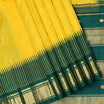
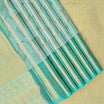
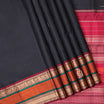
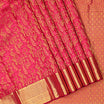
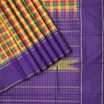
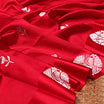
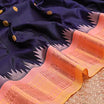
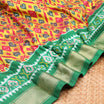
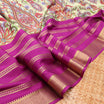
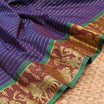
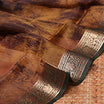
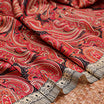
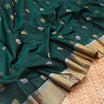
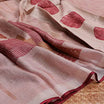
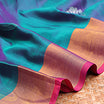
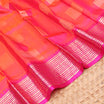
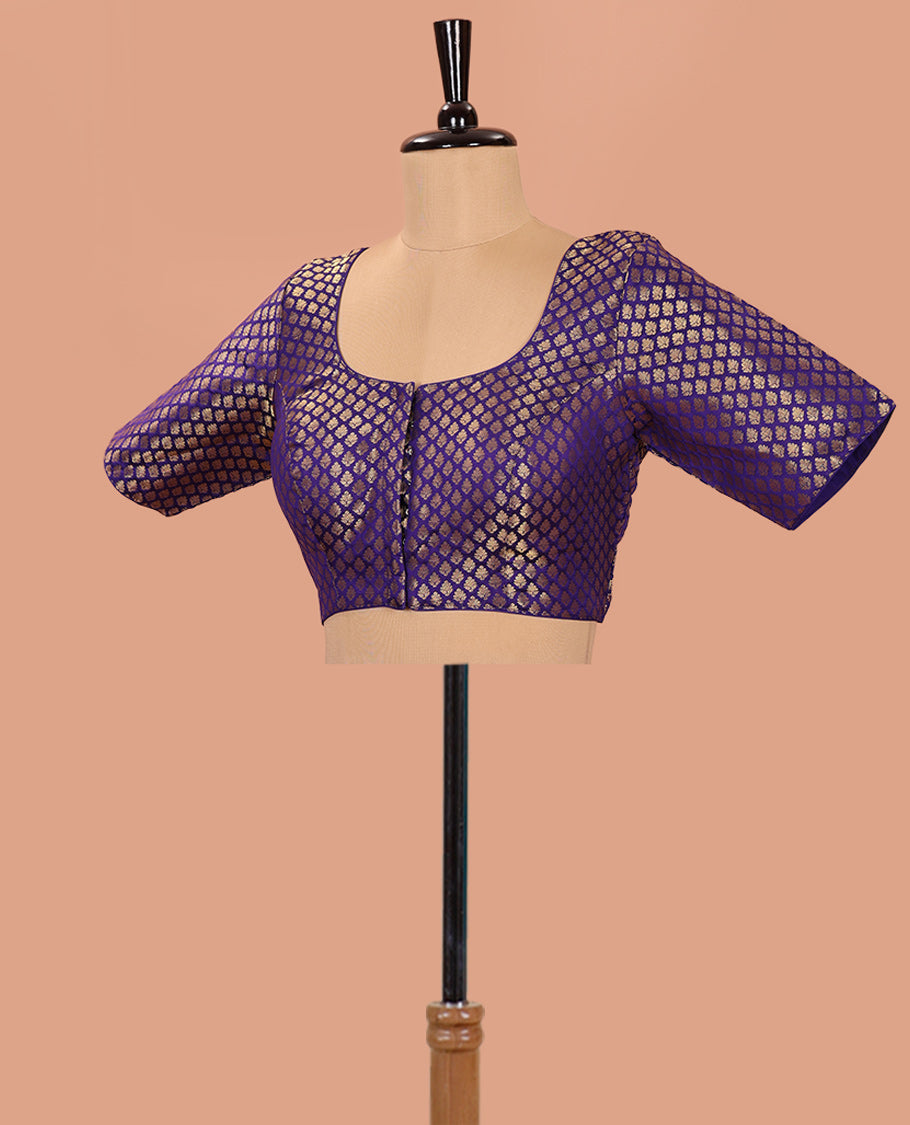
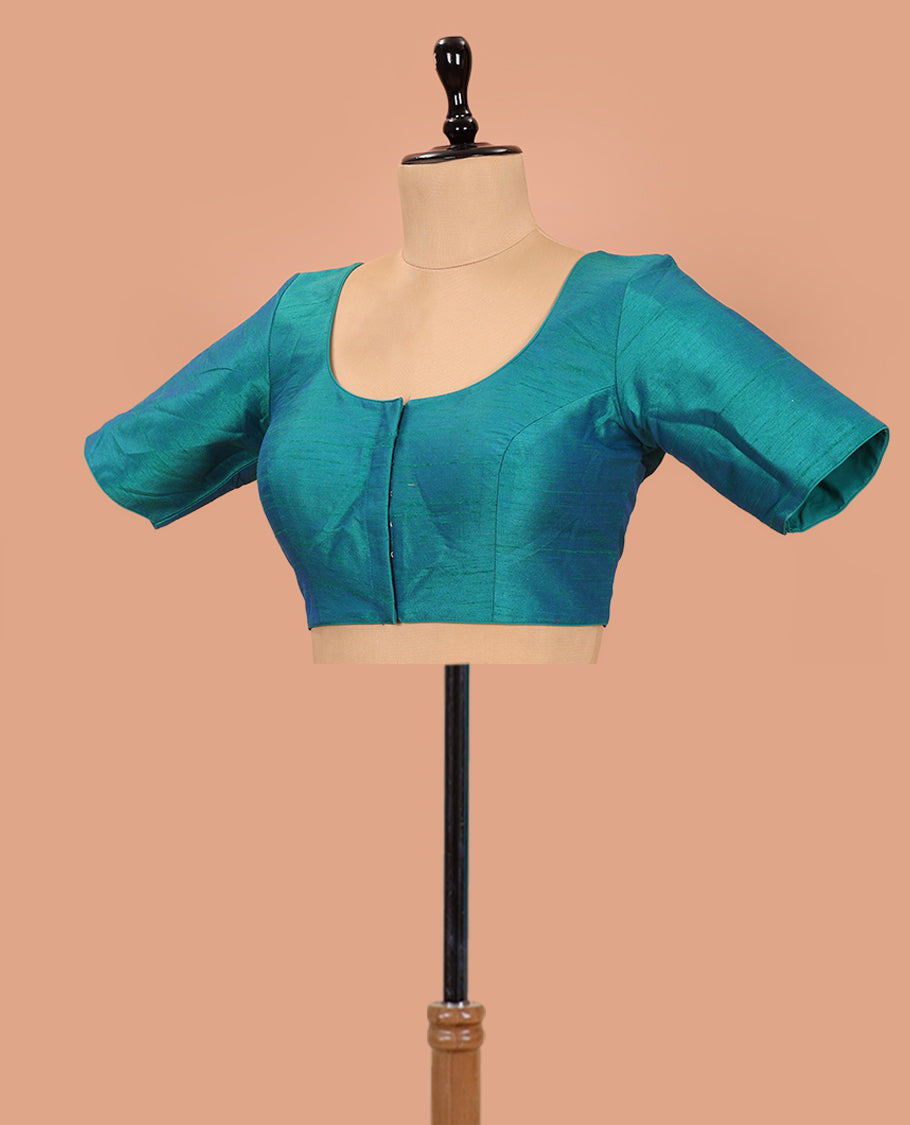
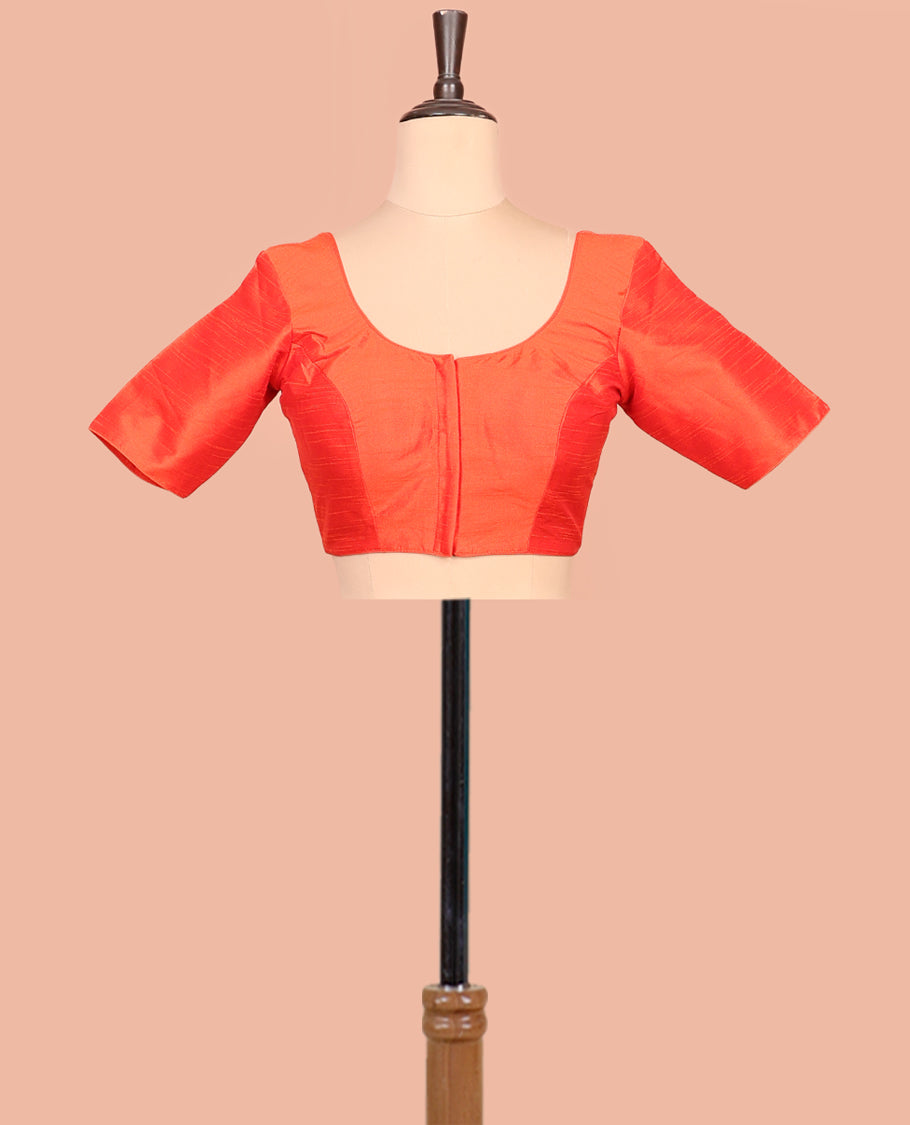
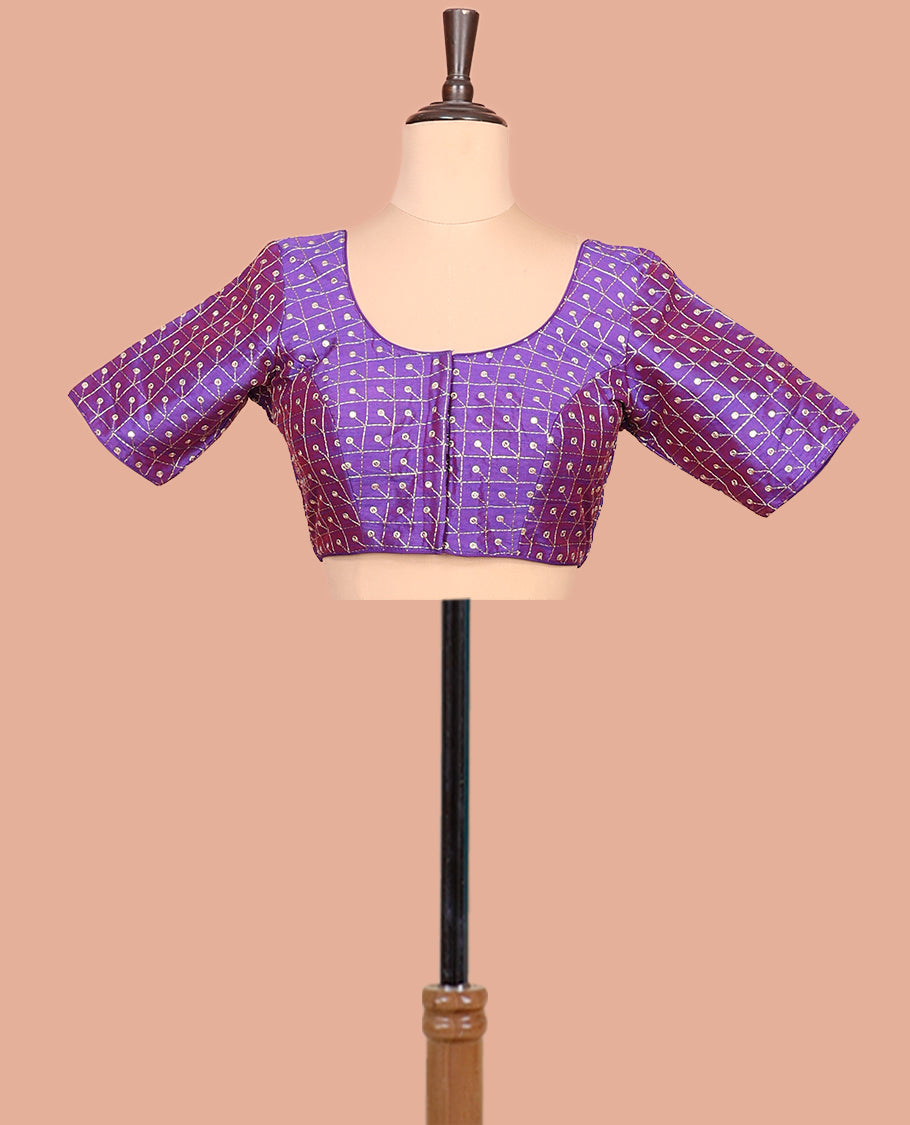
Add a touch of festive finesse to your wardrobe with our elegant sarees, adorned with motifs that capture the joy of the season.
Inside homes, families chant Thiruppavai or recite verses from sacred texts. Outside, temple processions and bhajan gatherings create a sense of collective devotion. Attire becomes a gentle yet powerful expression of faith. Choosing the right silk saree style becomes just as important as the kolam drawn at the threshold.
Traditions and Rituals of Margazhi
The rituals of Margazhi are rooted in devotion and discipline. Some of the most observed practices include:
-
Early Morning Temple Visits - Families wake before sunrise, bathe, and head to temples, often in traditional silk saree draping styles.
-
Kolam Designs - Women decorate thresholds with rice flour kolams, believed to invite prosperity.
-
Bhajans and Hymns - Groups gather to sing Thiruppavai by Andal, an integral part of Tamil spiritual heritage.
- Temple Processions - Iconic temples like Srirangam come alive with processions, music, and devotional gatherings.
Looking for elegant choices that sparkle this festive season? Check out the elegant motifs and more in our wide range of ever-sophisticated sarees, curated just for you!
Here, the different styles of wearing a silk saree add grace to the rituals. Just as kolams beautify the threshold, sarees beautify the worshipper, making devotion not only heartfelt but also visually radiant.
History and Significance of Margazhi in Tamil Culture
Margazhi is not merely a month; it is a cultural phenomenon. In Tamil Nadu, it is seen as the month of Andal, the only female azhwar saint, who composed the Thiruppavai. Her verses are recited daily during this month, symbolising surrender and love for the divine. Her love for Krishna knew no bounds, and he, mesmerised by her love and steadfastness, asked her to marry him, signifying a beautiful journey of togetherness and devotion.
Lamps are lit outside houses and temples before the break of dawn. Elegant kolams are drawn out, decorating the space with beautiful scenery. For thirty days, bhajans are chanted in the early morning light. Andal’s Thiruppavai is thirty verses that are recited in the glory of god. This is also a prominent period for the devotees of Natarajan, who, on the day of Arudhara’s star, performed his divine dance art. The Thiruvembavai is also sung as praise. Also, Vaikunta Ekadashi, the day when the gates of the God’s abode are open, is an auspicious day on which prayers are intonated to receive moksha.

Historically, the month was also a way for communities to bond. A period of spiritual connection and growth, the act of drawing kolams, singing together, and visiting temples in coordinated silk saree draping styles created a cultural fabric of unity. The Margazhi music and dance festivities are highly prominent here, a celebration of art.
The blend of devotion and beauty continues today. Attire choices, like how to style a silk saree during this sacred season, reflect heritage and spirituality.
Temple Attire for Margazhi Temple Visits
Temples in Margazhi are more than places of prayer; they are living theatres of colour, music, and devotion.
Women in vibrant sarees walk towards sanctums with diyas in hand, while men adorn traditional veshtis.
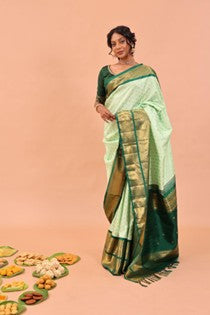
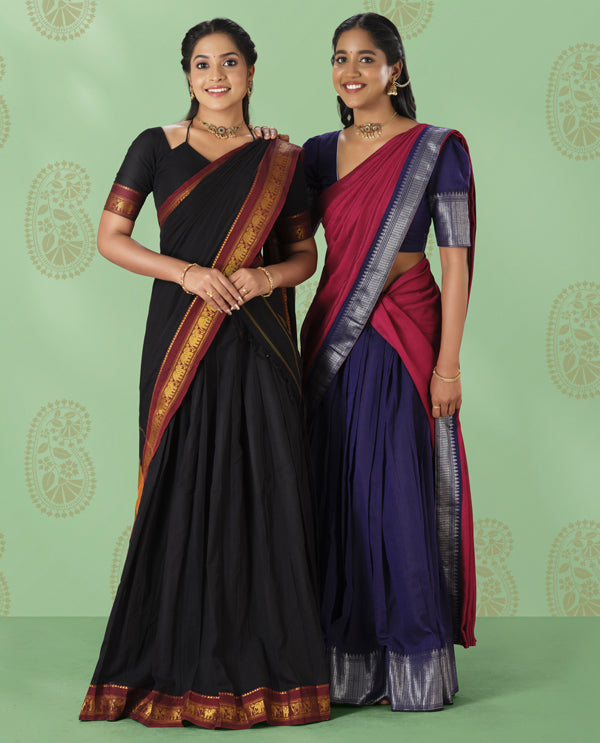
The attire here is grand yet resplendent. Deep reds, gold, and green silks are common, resonating with the temple’s grandeur. Border designs and motifs inspired by temple architecture, like lotus flowers, peacocks, and conch shells, often appear in silk saree-wearing style patterns.

Silk Saree: The Eternal Symbol of Margazhi
Silk sarees hold a special connection with Margazhi. Their lustre, warmth and intricate designs make them ideal for early morning rituals and temple visits. A soft drape keeps the wearer comfortable in the cool Margazhi breeze while symbolising festivity.
Women often experiment with different styles of wearing a silk saree to match the mood of each occasion. Whether it is a grand temple festival or a simple bhajan at home, the drape becomes a way to express devotion.
For a deeper look into which sarees blend with the music and devotion of the season, you can explore Margazhi: The Season of Melodies.
The Colour Scheme of Margazhi Attire
Colours during Margazhi reflect serenity, devotion, and festivity. Common shades include:
-
Deep Maroon and Red - Signifying prosperity and energy.

- Emerald Green - Linked to fertility and growth.

- Golden Yellow - Symbolising auspiciousness.

-
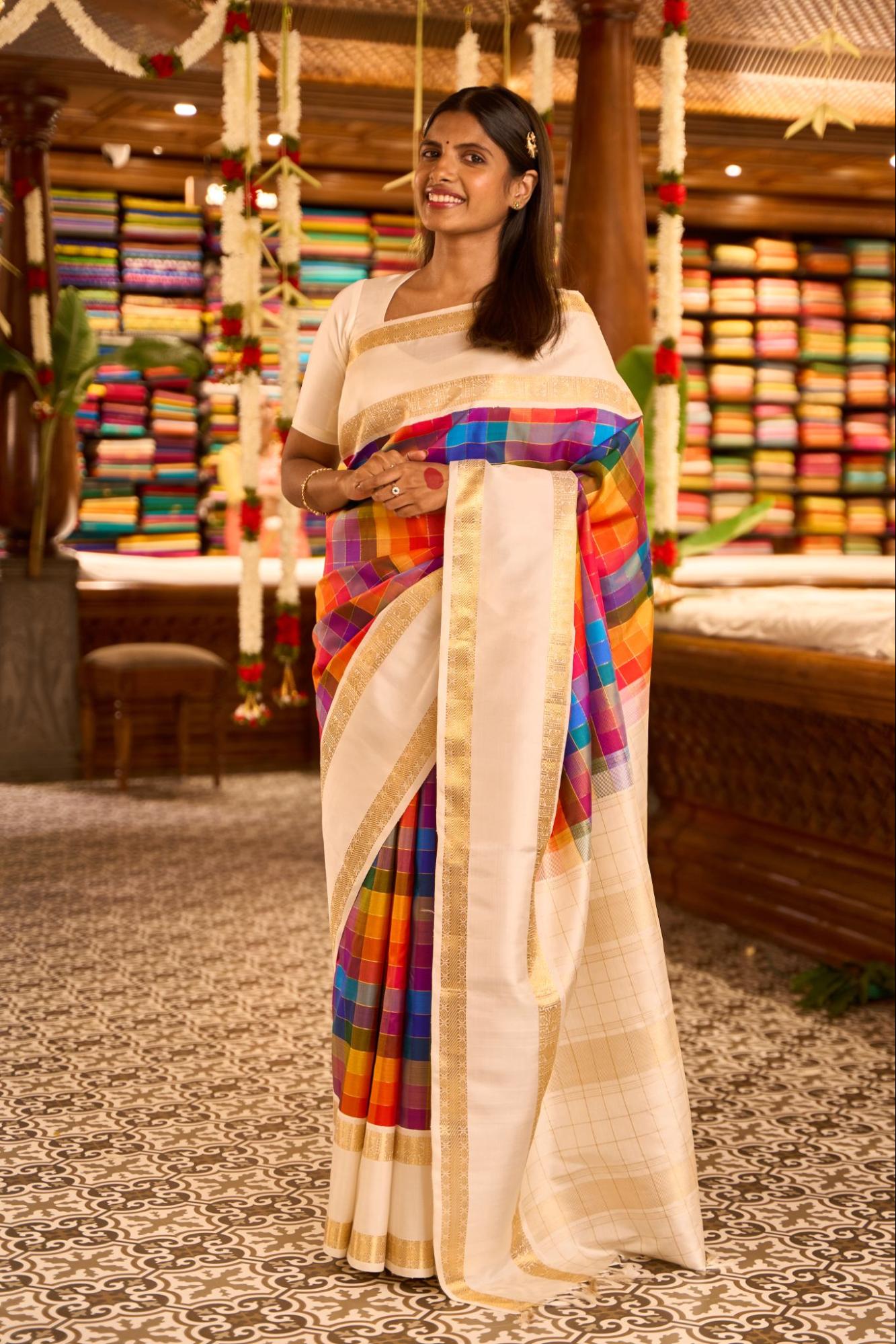
Ivory and White - Representing purity and peace.

These shades are often incorporated into silk saree draping styles, making every outfit resonate with the season’s symbolism. For a closer look at how these shades influence festive fashion, you can explore The Margazhi Edit on the Pothys blog.
Sarees and Attire for Home and Temple
 While sarees are often associated with temple visits, they also hold a place in home rituals. Women may choose lighter silks such as Vasundhara pattu or Mysore silks for comfort, while saving grander silk sarees, such as Samudrika pattu or Kanchipuram silks for temple festivals or music gatherings.
At home, a subtle silk saree style in softer shades feels practical yet elegant. At temples, bolder hues and elaborate zari shine under the subtle yet elegant diya lights and temple lights. This duality, comfort and grandeur reflect the rhythm of Margazhi itself.
Culture, Music, and Sarees
Margazhi is inseparable from music. The famous Chennai Music Season coincides with this month, where Carnatic concerts fill sabhas with melody. Here too, sarees are a silent participant.
Women attending kutcheris often experiment with how to style a silk saree to balance elegance with comfort, often coordinating with jewellery that complements temple settings. Just as a raagam evokes emotion, the drape of a saree amplifies grace.
This intersection of culture, music, and sarees elevates Margazhi beyond ritual; it becomes an immersive aesthetic experience. To explore how traditions of art and attire intertwine during this season, you can also read The Margazhi and Art on the Pothys blog.

Draping Styles: Tradition Meets Grace
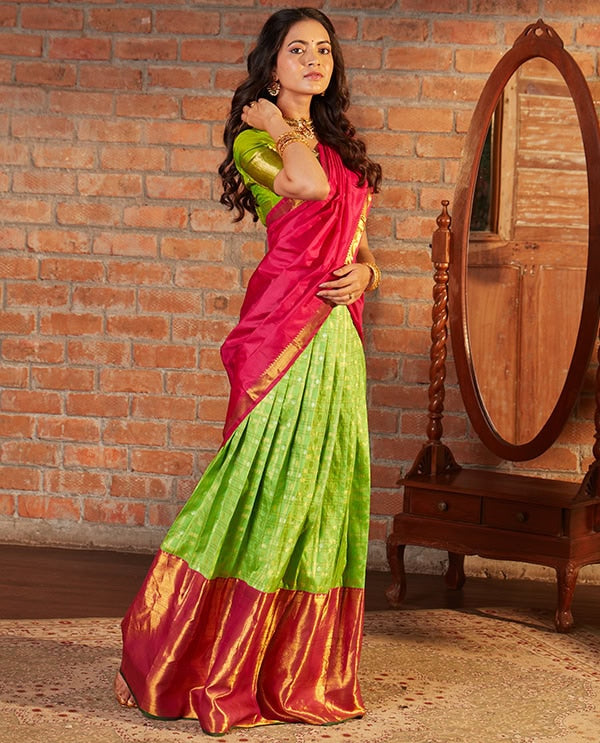
Margazhi-inspired silk saree draping styles highlight elegance without compromising on tradition. Traditional drapes like the Nivi style remain timeless, while temple festivals sometimes inspire more elaborate folds.
For younger women, exploring how to wear a silk saree in a modern style allows them to honour tradition while adding a contemporary touch. A well-draped saree becomes part of the spiritual canvas of Margazhi mornings.
Effortlessly Draping and Styling Your Silk Saree
Mastering silk saree draping styles doesn’t have to be complicated. Whether you’re preparing for Margazhi temple visits or festive gatherings, the right drape can enhance the natural beauty and grace of your saree. Here’s how to effortlessly style your silk saree while keeping it comfortable and elegant:
- Start with the Right Fabric: Opt for a pure silk saree for a rich fall and sheen. The smooth texture makes pleating and tucking easier while maintaining a regal silhouette.
- Perfect the Pleats: Create neat, even pleats and pin them securely at the waist. This gives your saree a structured look, especially for long temple hours or musical evenings.
- Classic Nivi Draping: The timeless style that suits every body type. Perfect for traditional and temple occasions.
- Modern Pleat Styles: Experiment with layered or pre-stitched pleats to create a contemporary twist while maintaining the saree’s elegance.
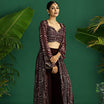
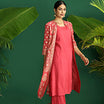
- Fusion Drapes: Combine traditional drapes with modern blouses or belts for a chic, Instagram-worthy look.
- Pallu Over Shoulder: Let the pallu flow naturally or pin it neatly for a sophisticated finish, ideal for weddings and music gatherings.
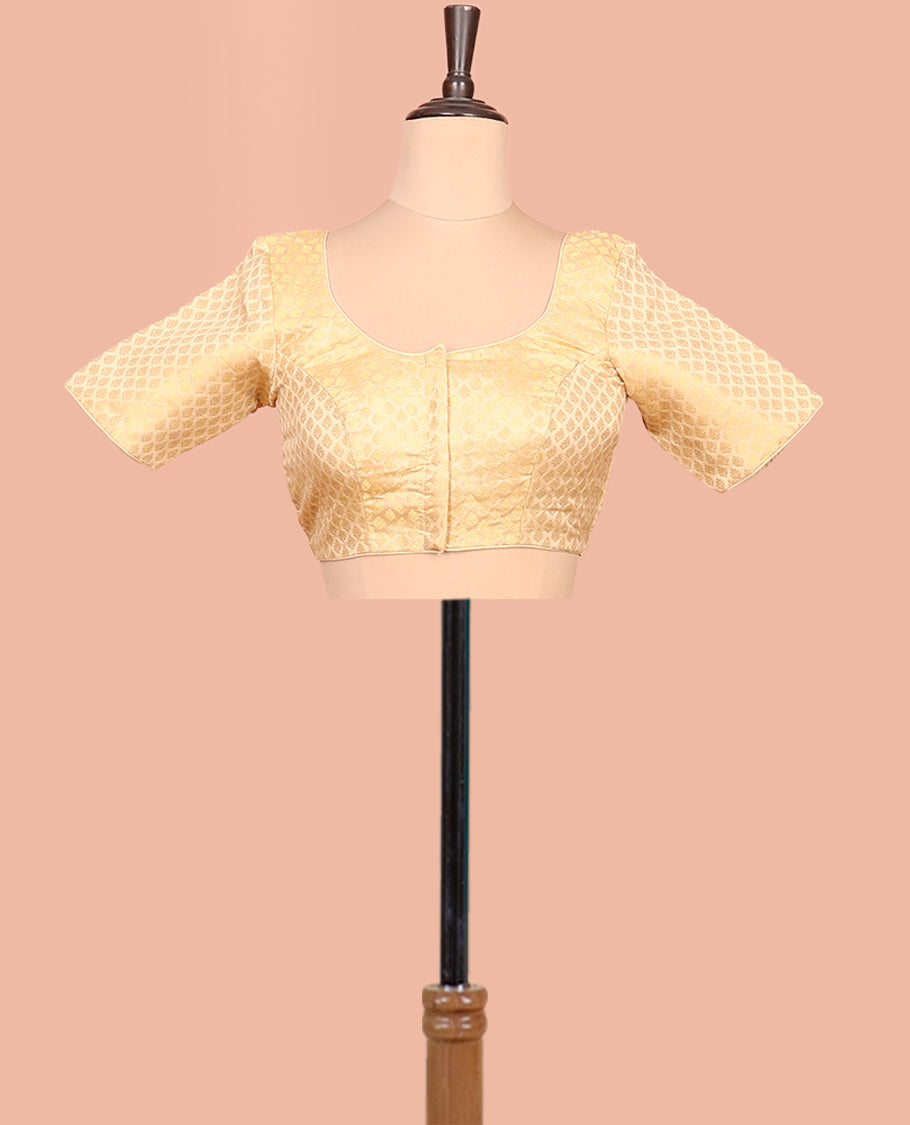
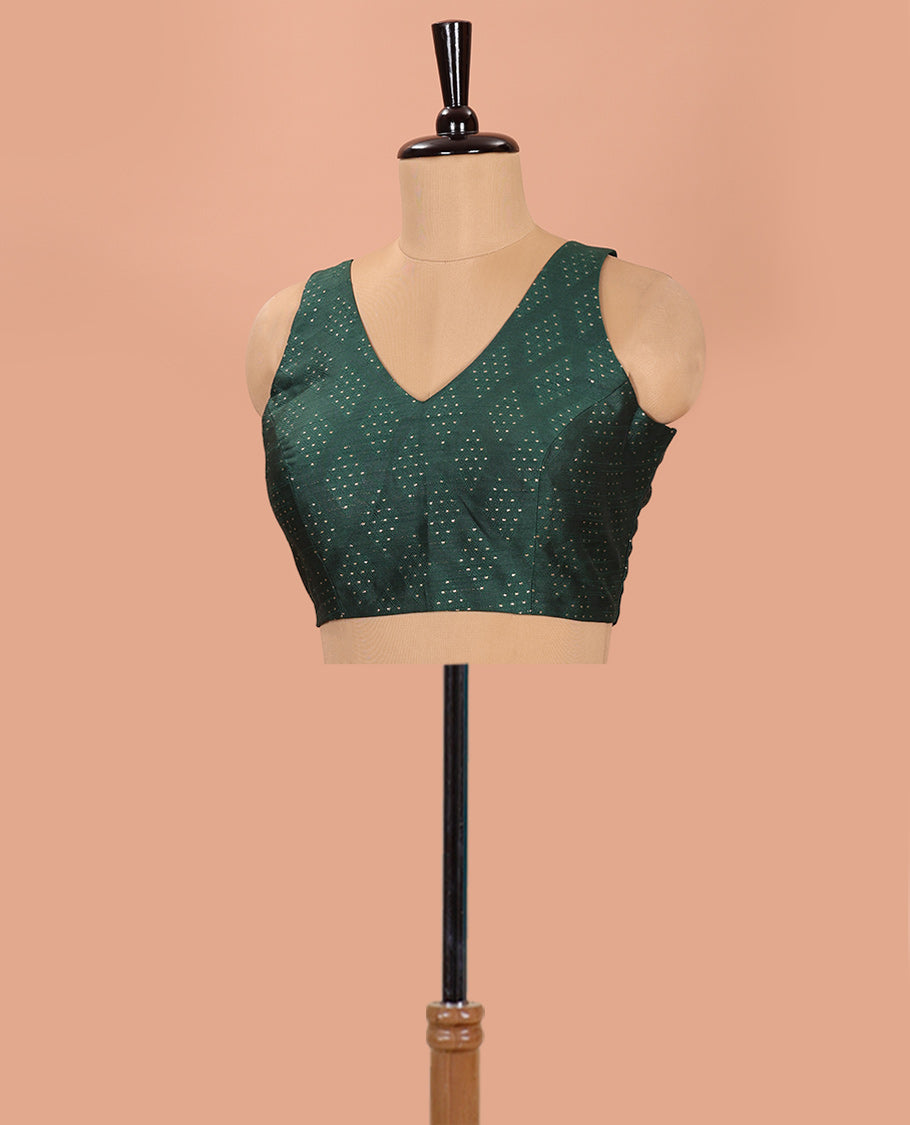
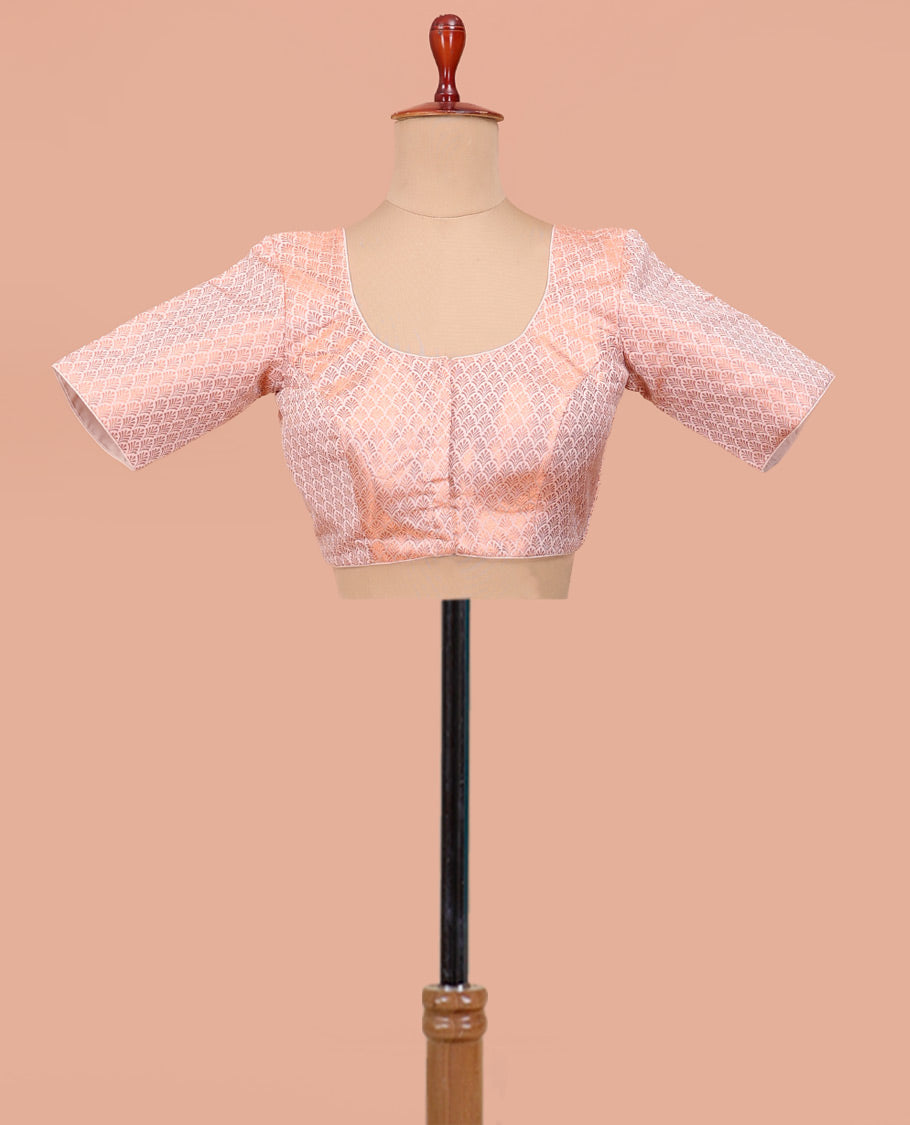
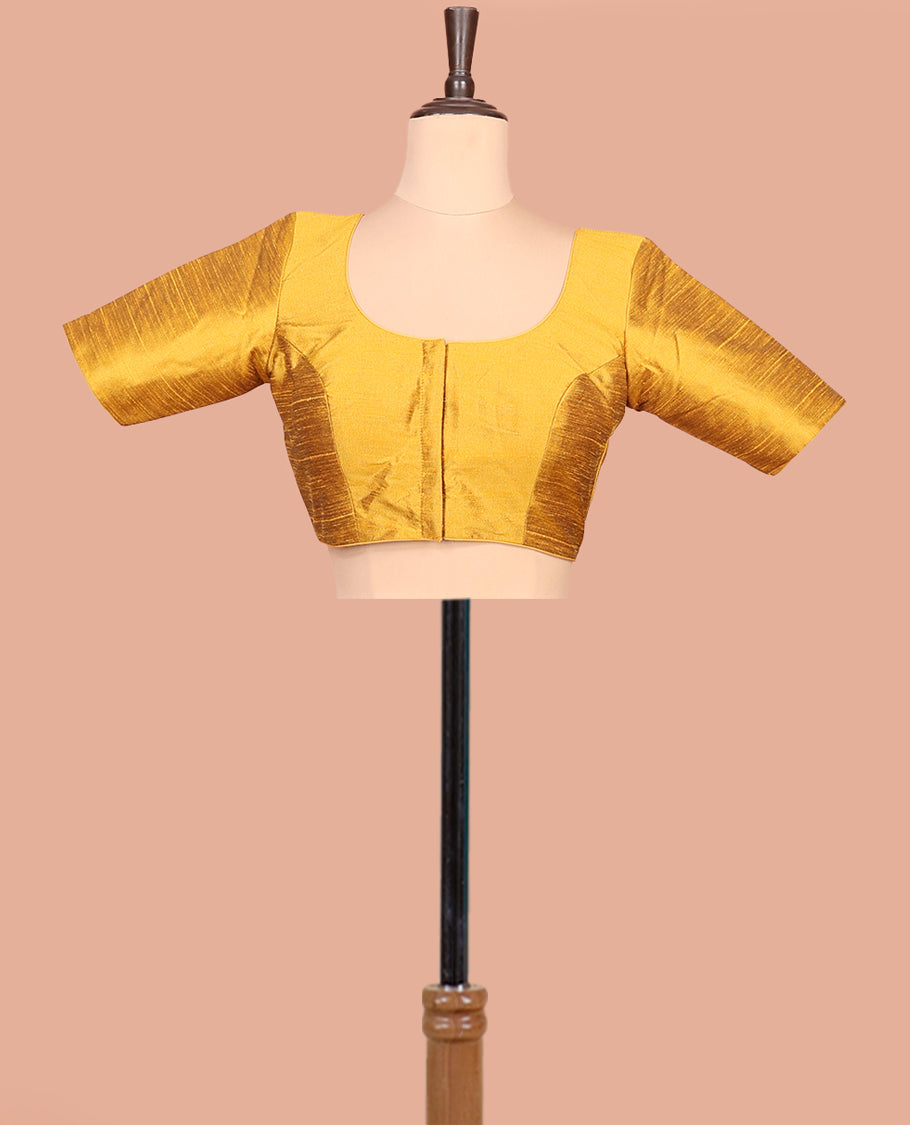
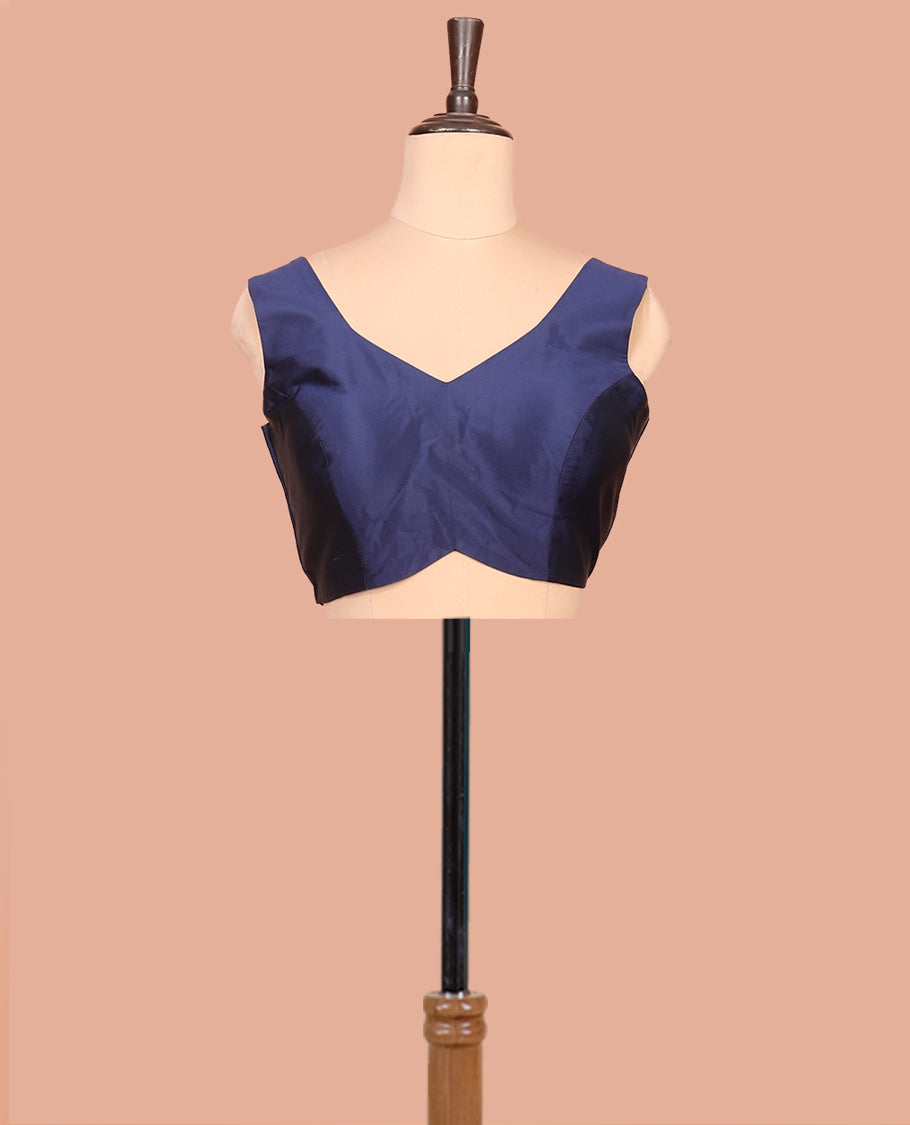
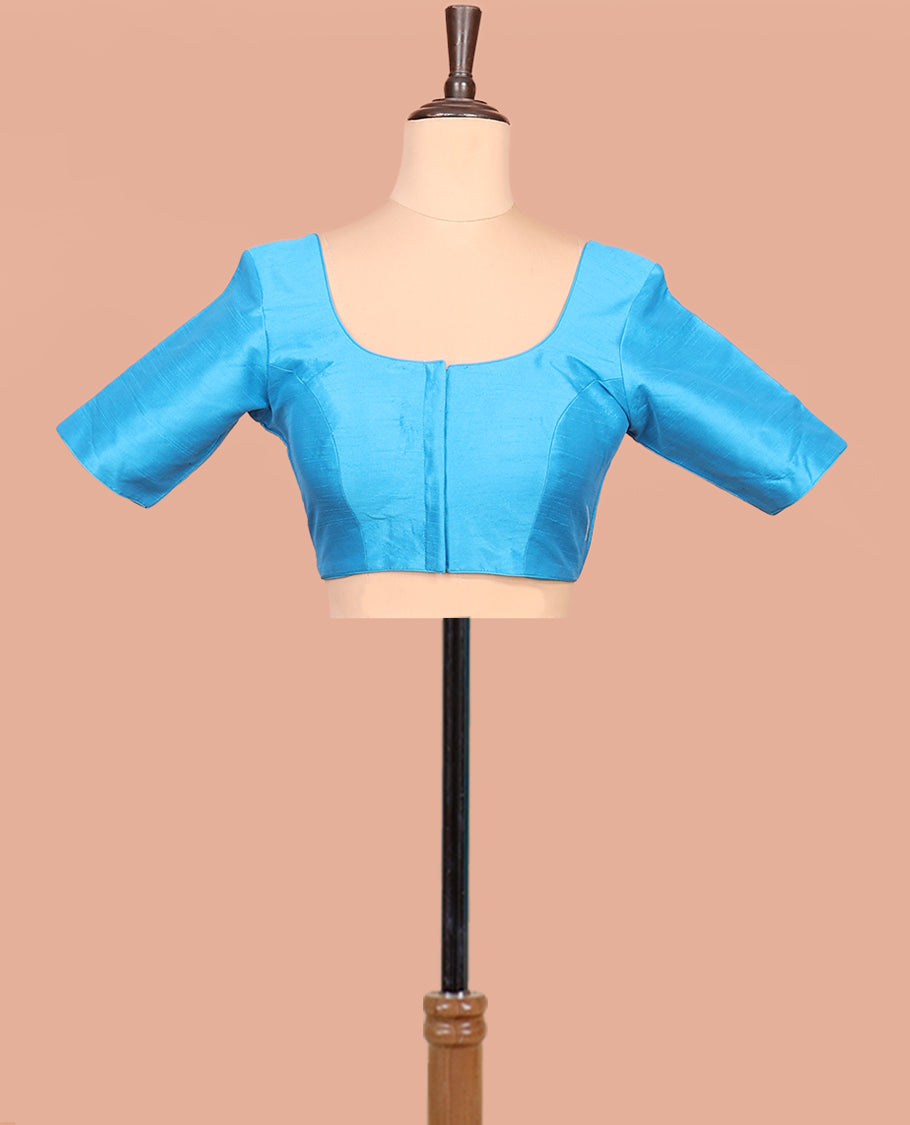
- Balance the Blouse: Pair your saree with a contrast blouse or a modern-cut design to give your silk saree style a refreshing twist.
- Accessorise Smartly: Temple jewellery and jasmine-adorned hair complete the Margazhi look.
With these tips, every fold of your silk saree becomes a statement of grace- blending devotion, comfort, and timeless beauty in every fold.
Honouring the Hands that Weave
Behind every saree is the artistry of weavers. Margazhi is a time to honour not just temples and traditions but also the hands that create beauty. Weavers in Tamil Nadu have preserved age-old techniques, passing them down through generations.
Their designs often inspire the different styles of wearing silk saree we see today; motifs of kolams, temple towers, and nature woven into shimmering silk. Supporting weavers sustains both tradition and livelihood, making every saree a prayer in itself.

Pothys Range for Margazhi
Pothys celebrates this spirit with collections that reflect the colours and motifs of Margazhi. From richly woven designs to breezy silks, each piece carries a story of devotion.
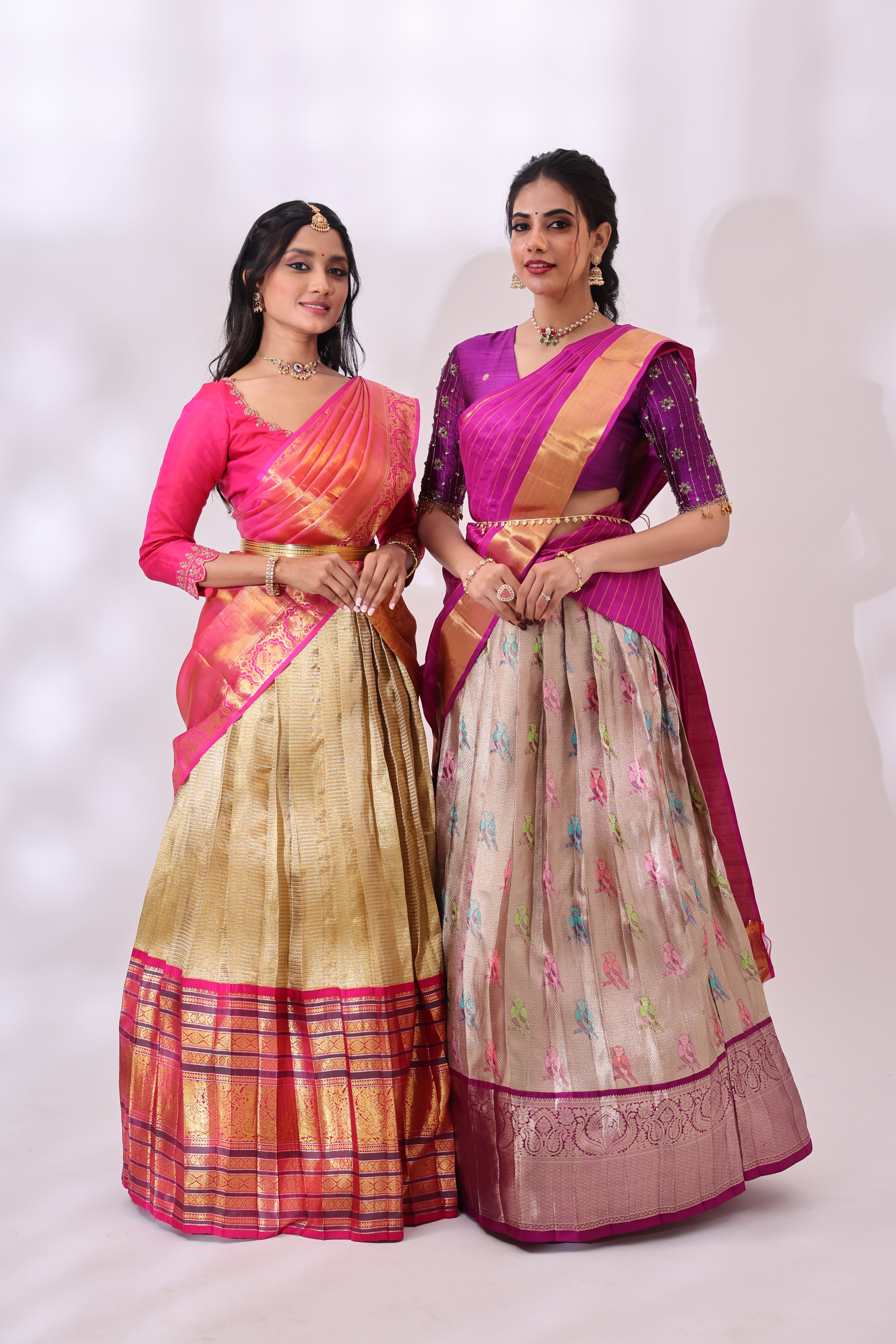
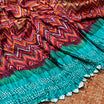
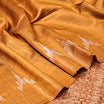
During this auspicious season, women explore silk saree draping styles from Pothys’ range to complement rituals, music gatherings, and temple visits. Patterns echo kolams, floral motifs, and temple borders, blending seamlessly into the spirit of Margazhi.
Draping Devotion in Silk
Margazhi is not just a month- it is a season of devotion, culture, and beauty. The rituals, kolams, music, and temple visits together weave an atmosphere of serenity and festivity.
Silk sarees play a timeless role in this celebration, whether through traditional drapes or how to style a silk saree for contemporary gatherings. In every fold of fabric and every motif of zari, Margazhi finds its expression- eternal, graceful, and sacred.